
What Is Kimi? The Chinese AI Assistant from Moonshot AI, Explained
This is an unofficial site, not affiliated with Moonshot AI. For the official product, visit kimi.com.
Kimi is an AI chatbot and family of large language models built by kimi moonshot ai company Moonshot AI. It answers questions, reads long documents, writes code, and holds conversations in multiple languages, much like ChatGPT or Claude.

What sets it apart is a context window large enough to hold an entire book or codebase in a single conversation, according to the Wikipedia entry on Kimi. This guide covers what Kimi is, who made it, and how to start using it — for the official product itself, go to kimi.com rather than any third-party summary.
What is Kimi, in one paragraph?
The short answer
Kimi is a conversational AI assistant, and the underlying large language models share the name. It was built by Moonshot AI and released to the public on November 16, 2023. Since then it has grown from a single chat product into a family of models, culminating in the open-weight Kimi K2 release.
The name and the maker
“Kimi” is the product name; Moonshot AI (月之暗面, literally “Dark Side of the Moon”) is the Beijing company behind it, per the Wikipedia entry on Moonshot AI. The name nods to a Pink Floyd album, a small signal of the founders’ ambitions to build something globally recognizable. For the fuller company story — funding rounds, founders, and where Moonshot AI fits among China’s frontier AI labs — see the dedicated Moonshot AI page.
Who created Kimi?
The team behind it
Kimi was founded in March 2023 by Yang Zhilin, Zhou Xinyu, and Wu Yuxin, schoolmates from Tsinghua University. Moonshot AI is headquartered in Beijing and is frequently grouped among China’s “6 AI Tigers,” an informal shorthand for the country’s leading generative-AI startups. The company has attracted serious institutional backing:
- Alibaba invested roughly $1 billion in February 2024
- Tencent and Gaorong Capital co-led a $300 million round in August 2024
- IDG Capital led a further round of roughly $600 million in October 2025
That capital funded the compute and research needed to move from a 128k-token chatbot to a trillion-parameter open-weight model in under two years.
What can Kimi do?
Core capabilities
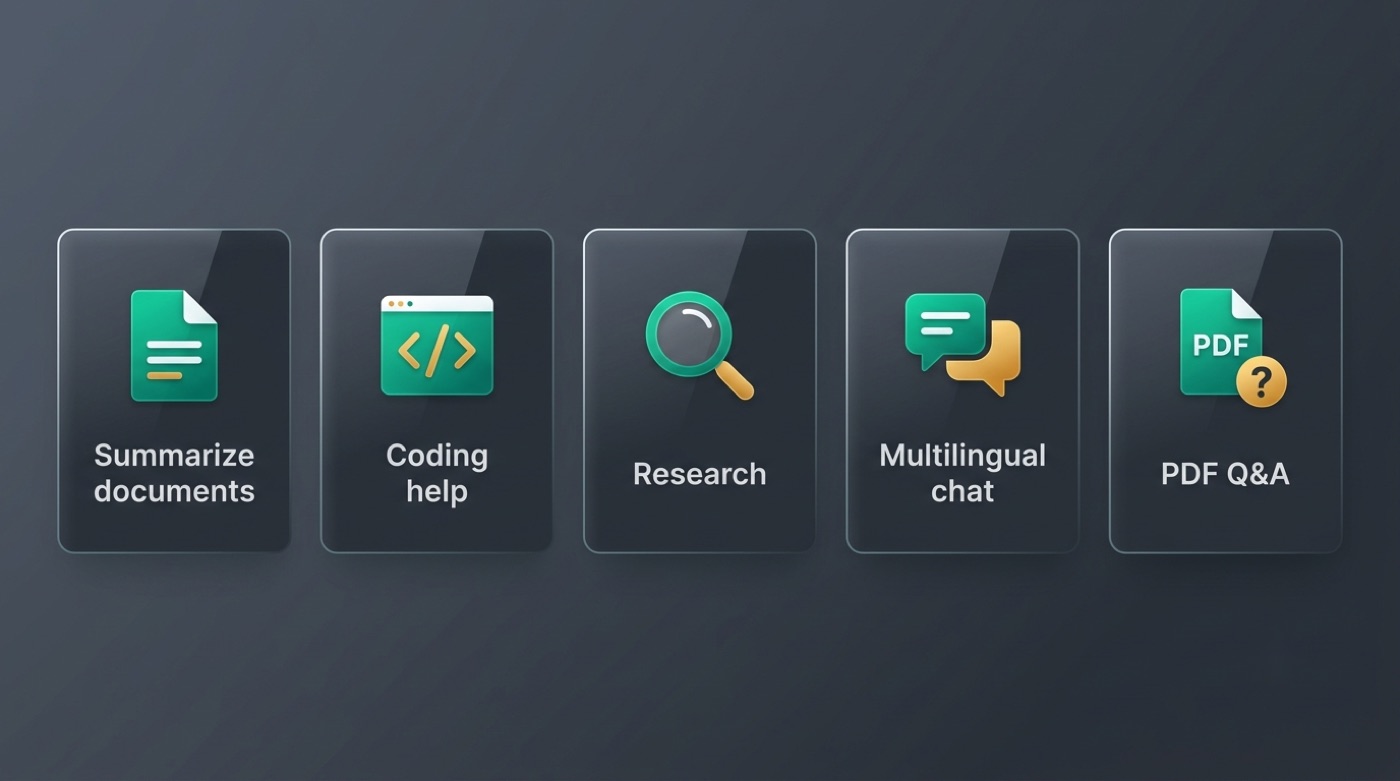
Kimi’s feature set overlaps with other general-purpose chatbots, with long-document handling as the headline strength:
- Long-document reading and summarization
- Coding help — explaining, writing, and debugging code
- Research assistance across multiple sources
- Multilingual conversation
- PDF and file question-answering
Exact capabilities vary by model release and subscription tier, so treat this as a general picture rather than a fixed spec sheet — check kimi.com for what’s currently live.
What makes it stand out
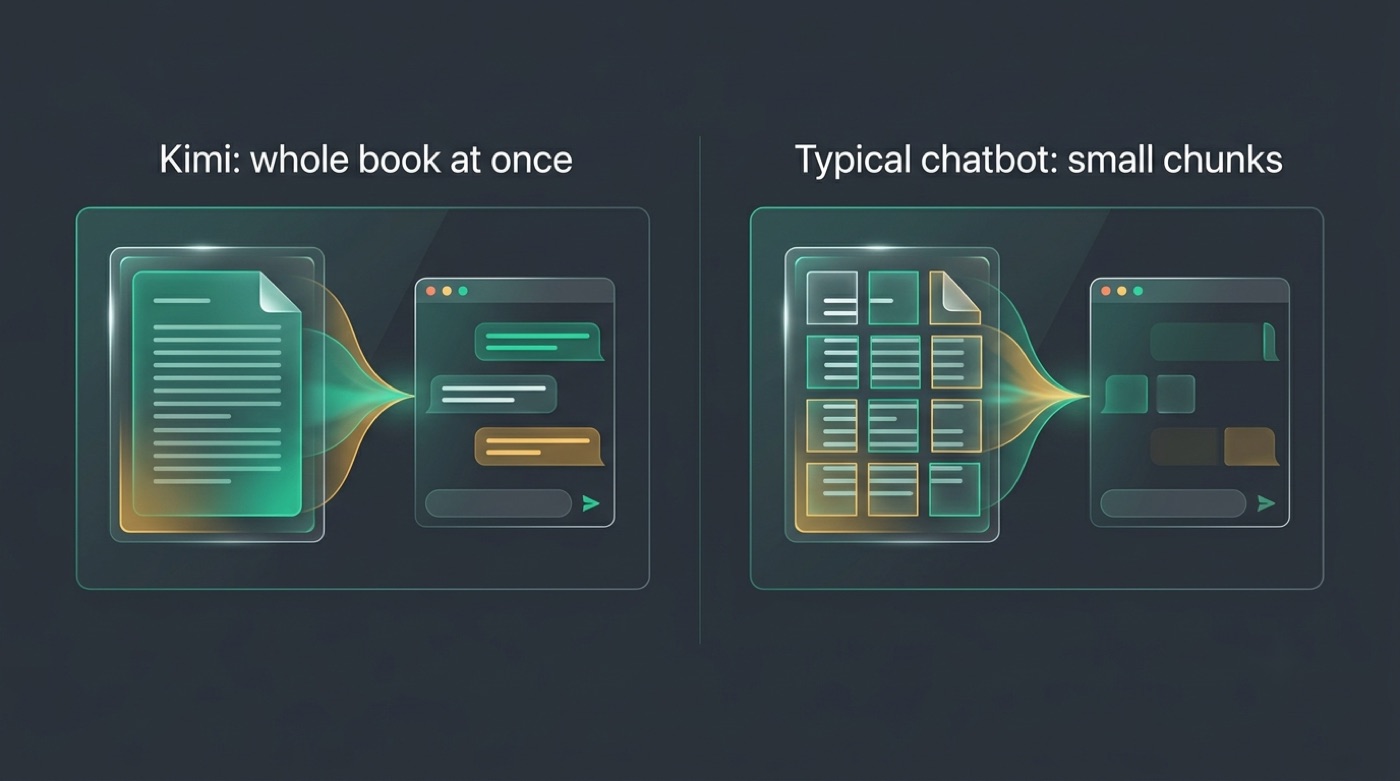
The long context window is Kimi’s signature feature. Instead of trimming or forgetting earlier parts of a conversation, Kimi can hold a whole book, research paper, or codebase at once, which changes how you can use it — pasting in a full contract or a large repository instead of splitting it into chunks.
How does Kimi work? (models and long context)
Large language models under the hood
Kimi is powered by a family of large language models, not a single fixed model. The lineup has shifted with each release:
- Kimi K1.5 (January 2025) — Moonshot AI said it matched OpenAI’s o1 reasoning model on several benchmarks
- Kimi-VL (April 2025) — a smaller, open-source multimodal model
- Kimi K2 (July 2025) — a 1-trillion-parameter mixture-of-experts model with 32 billion active parameters per forward pass, released with open weights under a modified MIT License
Model weights and cards are published on Hugging Face, and the training code is hosted on Moonshot AI’s GitHub.
Kimi K2 is released with open weights, giving developers and researchers direct access to the model rather than API-only access.
Moonshot AI model card, Hugging Face
Any capability attributed to K2.5 or a “K3” release should be treated as unverified until confirmed on the official site — Moonshot AI ships new checkpoints faster than third-party summaries can track them.
The long context window
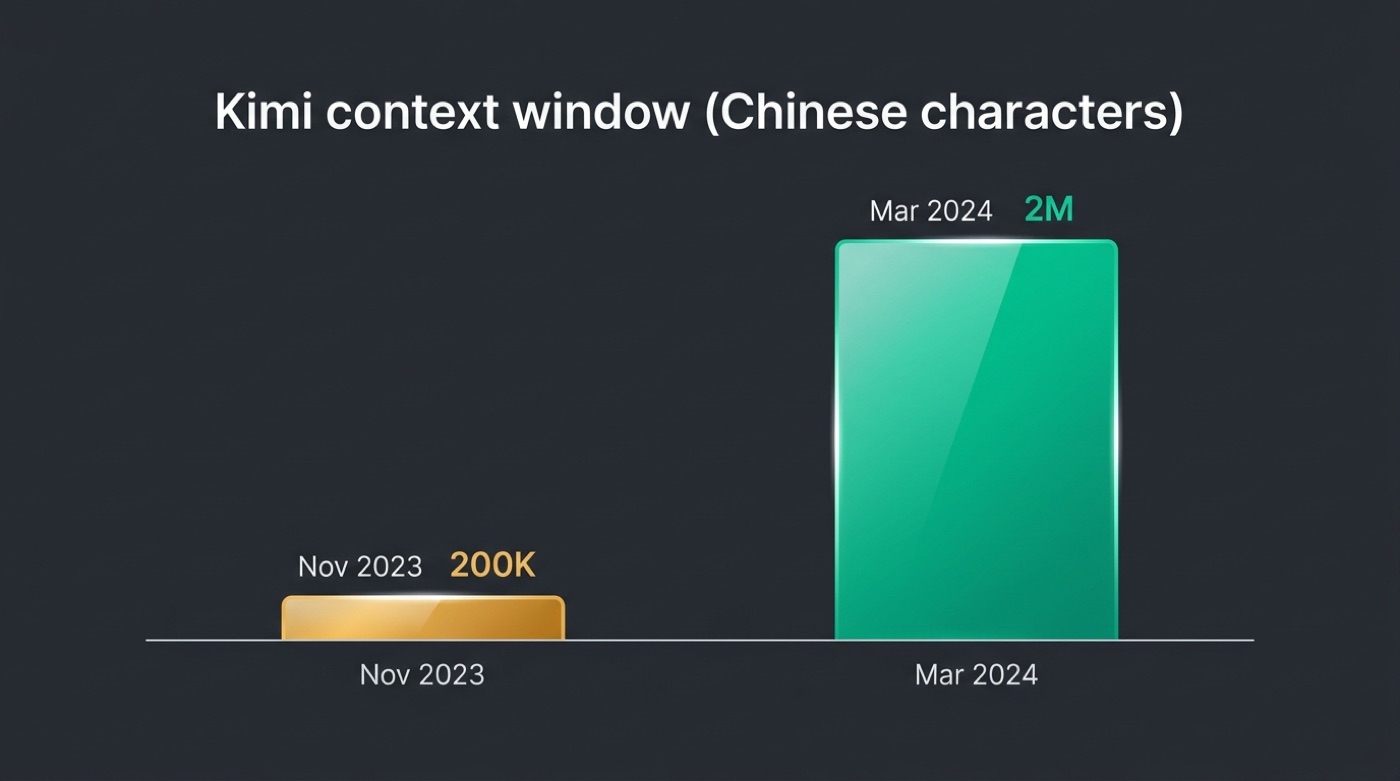
The context window has grown considerably since launch:
| Release | Approximate context |
|---|---|
| November 2023 (launch) | ~128k tokens / 200k Chinese characters |
| March 2024 | Up to 2 million Chinese characters |
| Later releases (K1.5, K2) | Token-based limits (specifics vary by model) |
For the exact context limit of the current model, check the specifications on kimi.com rather than relying on older figures — Moonshot AI has changed how it measures and reports context length across releases.
Is Kimi free, and how do I use it?
Getting started
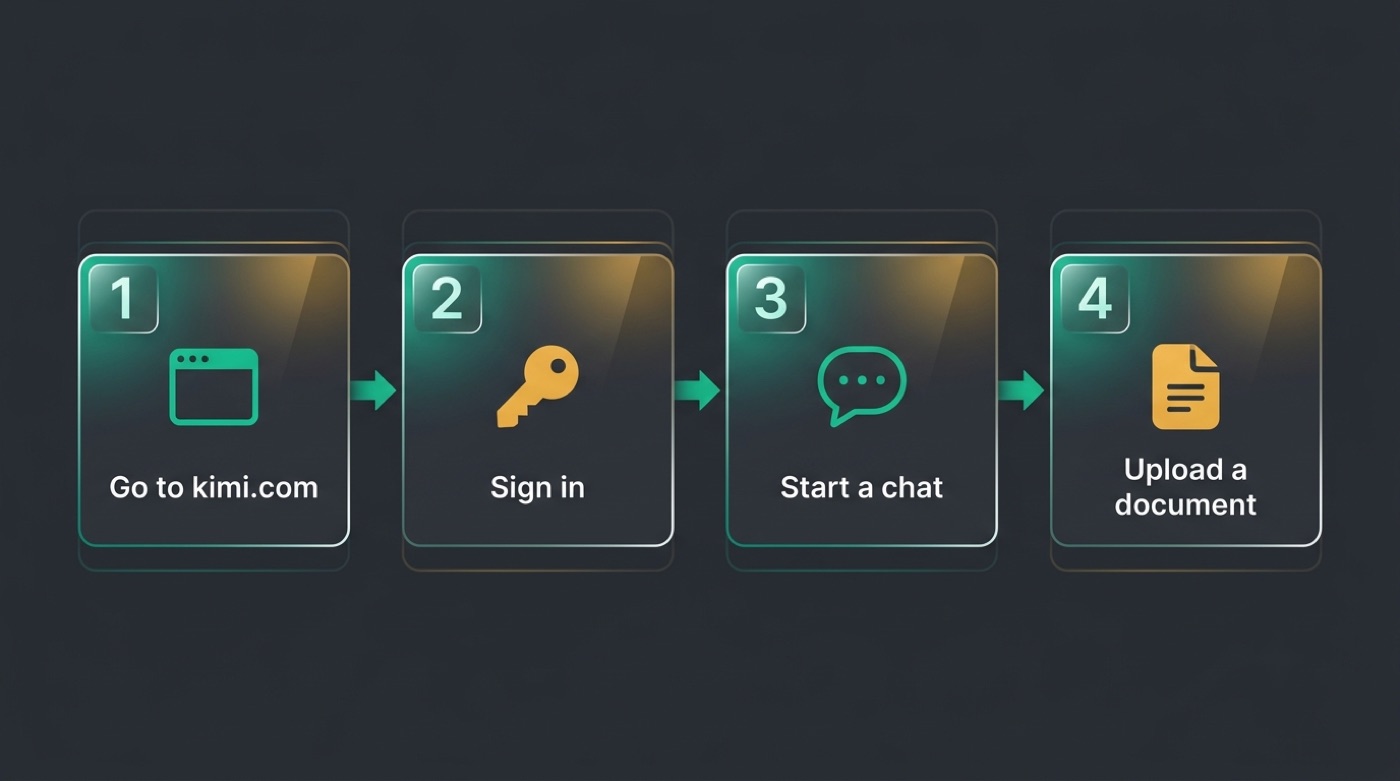
Getting started takes about a minute:
- Go to kimi.com
- Sign in with an email or supported account
- Start a new chat
- Upload a long document, PDF, or paste in text
- Ask your question and iterate in the conversation
Mobile apps are available for on-the-go use, and developers who want programmatic access can use the API platform at platform.moonshot.ai instead of the consumer chat interface.
Free vs paid
Kimi offers a free tier with usage rate limits, alongside paid subscription tiers. According to the Wikipedia article on Kimi, these paid tiers have been reported under tempo-themed names such as Moderato, Allegro, Allegretto, and Vivace. Pricing and tier names change over time, so confirm current details on the official pricing page before subscribing.
| Tier type | What to expect |
|---|---|
| Free | Chat access with rate limits on usage |
| Paid (tempo-named tiers) | Higher usage limits, priority access; exact pricing verify on kimi.com |
| Developer API | Pay-as-you-go access via platform.moonshot.ai |
Kimi vs other AI chatbots (in brief)
Long context is the differentiator. Where many general-purpose chatbots cap conversations at a few hundred thousand tokens or less, Kimi has repeatedly pushed the ceiling higher, letting users work with entire books or large codebases without manual chunking.
Open weights set K2 apart from most rivals. Kimi K2’s release under a modified MIT License means researchers and companies can inspect, fine-tune, or self-host the model, an option that closed-weight competitors like OpenAI’s o1 don’t offer.
Kimi is best understood as a Chinese frontier-model family known for long context and, with K2, open weights — rather than a single fixed product. A few things to keep in mind when comparing it to other chatbots:
- Benchmark scores change fast — treat any single number as a snapshot, not a permanent ranking
- Open-weight releases (like K2) can be self-hosted; most closed competitors cannot
- Context-window limits are reported differently across vendors (tokens vs. characters), so compare like with like
Head-to-head performance claims against other named chatbots should be verified on current benchmarks rather than taken from any single source, including this one.